10 Ways to Make Inclusive Kids Playgrounds at Home
Playsourcehome – 10 Ways to Make Inclusive Kids Playgrounds at Home
Creating an inclusive playground at home means making a safe and fun space for every child. From toddlers to kids with special needs, inclusive play encourages social bonding and equal participation. With some thoughtful planning, you can design a space that welcomes all children, regardless of their abilities.
According to Playsourcehome and insights from Playsourceinfo.com, inclusive play areas are not only beneficial but also essential. They help foster empathy, teamwork, and confidence. Below are ten effective ways to build Inclusive Kids Playgrounds right in your backyard or living space.
“Read more : Indoor Play Spaces at Playtopia Adventure Margo City, Depok“
Inclusive playgrounds are not only about accessibility. They ensure every child can play, engage, and have fun together. Inclusion focuses on ability, not disability. Think beyond ramps. Consider play elements that engage all senses and motor skills.
Children experience the world through their senses. Some kids may be sensitive to light, noise, or touch. Add textures, visual contrasts, sound panels, and sensory walls. Sand tables and water stations work well too.
These features stimulate interaction for neurodivergent children and others. Playsourcehome suggests including musical play items like drums or chimes to enrich sensory input.
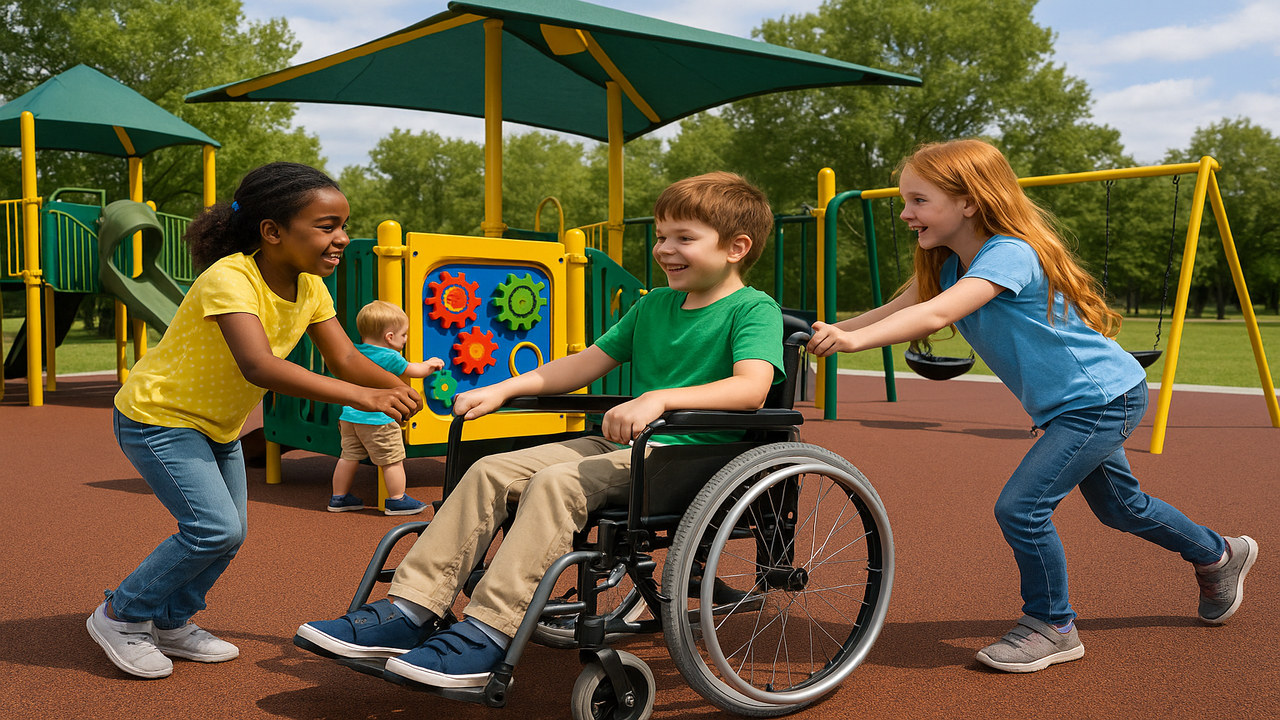
Not all kids can climb or jump easily. Add ground-level fun like puzzles, play panels, and interactive boards. These allow wheelchair users and kids with limited mobility to join in.
Avoid structures that require climbing ladders or steps without alternative access. Flat play areas ensure more kids can participate together.
The playground surface plays a key role in inclusion. Avoid grass or gravel, which can be hard for wheelchairs or walkers. Use rubber tiles, synthetic turf, or poured-in-place rubber.
According to Playsourceinfo.com, the right surfacing prevents injuries and allows easy movement for all children. It supports smoother play transitions between equipment.
Children differ in energy levels and interests. An inclusive playground should offer quiet spaces, active zones, and creative corners. Separate areas help reduce overstimulation and conflict.
Try adding a shaded reading nook, a pretend play kitchen, and a swing zone. These spaces cater to various emotional and physical needs.
Many manufacturers now offer adaptive swings, sensory rollers, and seated spinners. These are great for children with physical or developmental needs.
If space is limited, choose compact versions. A seated merry-go-round or inclusive slide can be both fun and functional.
“Read more : How to Use Google Gemini and Live Features on Android Phones and iPhones“
Safety is crucial for inclusive playgrounds. Avoid blind spots where adults cannot see children. Use open structures that allow easy supervision.
Install barriers around elevated areas and soft padding on corners. Use non-toxic materials. Bright colors can help children with vision challenges identify structures easily.
Design spaces that support cooperative games and social interaction. This helps break barriers between children of different abilities.
Set up group play stations like Lego tables or large puzzles. Add storytelling zones or roleplay tents to spark imagination and teamwork.
Let children help with ideas. Ask them what they want in their play area. Their input leads to more meaningful design choices.
By involving them, you also teach empathy and community values. Children learn to think about others’ needs and perspectives.
As your child grows, their play needs change. Keep the space dynamic. Refresh play features and add new challenges.
Review if the equipment still supports inclusive play. Check for wear and safety. Keep improving with feedback from kids and parents alike.
Building Inclusive Kids Playgrounds at home is more than a trend. It’s a step toward an equal world. Every child deserves the joy of play, regardless of ability.
By applying thoughtful design principles, you create a space where all children thrive. For more inclusive play tips, check out resources from Playsourcehome and Playsourceinfo.com.
Children who play together learn to respect and support each other. Let your playground be the place where inclusion begins.
Playsourcehome - A recent study shows that 68% of employees who regularly engage in educational games report measurable improvement in…
Playsourcehome - A 2023 UNICEF study found that 68% of children aged 5-10 show measurable improvement in communication after regular…
Playsourcehome - Over 79% of educators recognize play as essential for building collaboration and empathy in children, yet fewer than…
Playsourcehome - A staggering 65% of children entering primary school today will ultimately work in job types that do not…
Playsourcehome - A recent study by the World Economic Forum indicates that 65% of children entering primary school today will…
Playsourcehome - A recent report by the World Economic Forum identifies complex problem-solving and critical thinking as the top skills…