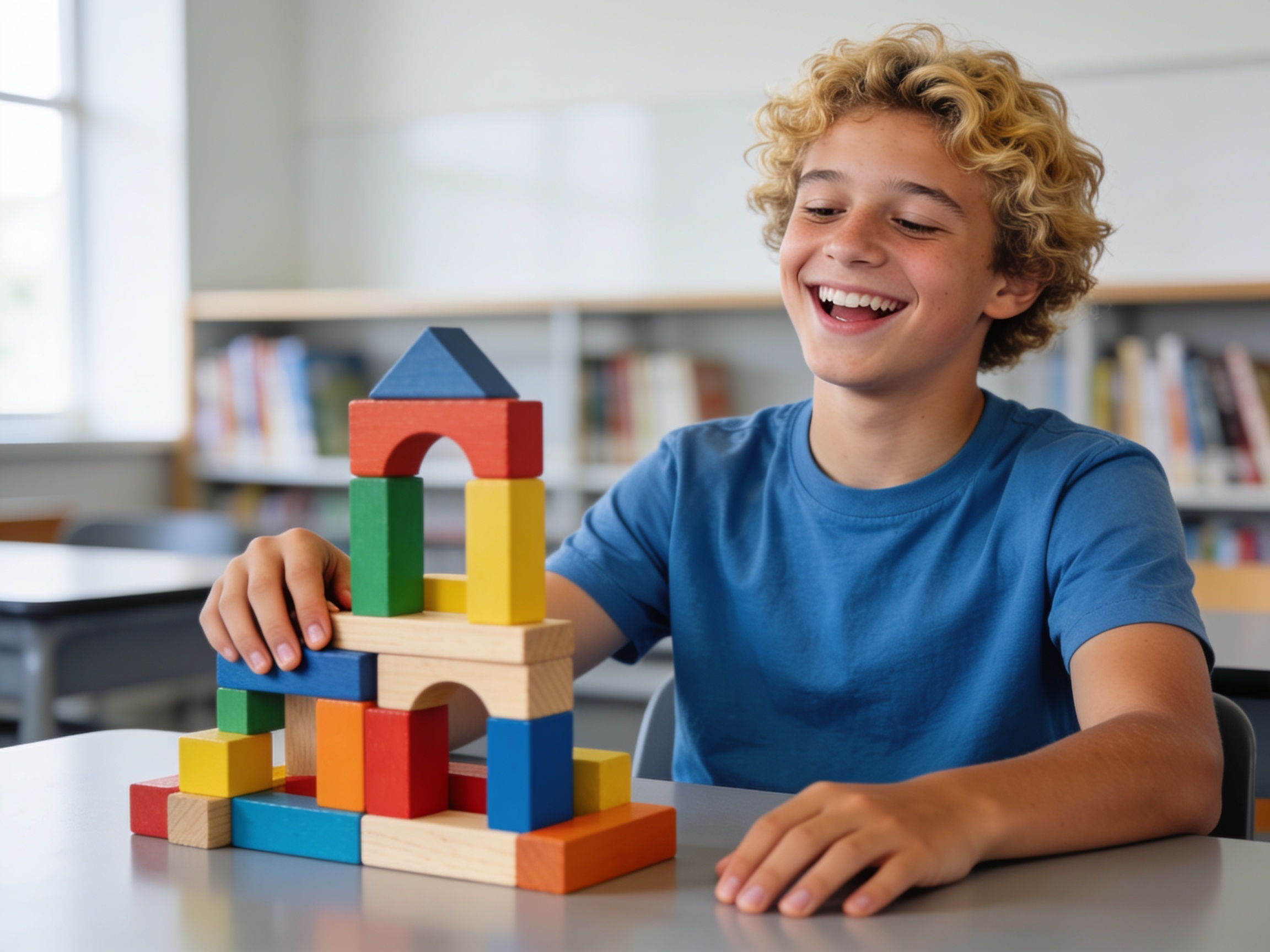
Children engaged in structured creative play show 30% higher cognitive flexibility compared to passive learning methods.
Playsourcehome – A recent report by the World Economic Forum identifies complex problem-solving and critical thinking as the top skills required for the future workforce, yet traditional education often falls short in cultivating these areas. This discrepancy creates an urgent need for supplementary methods that bridge the gap between academic knowledge and real-world application. The solution lies in integrating structured play into daily learning routines.
The definition of success in education is shifting from purely academic metrics to a more holistic view that includes emotional intelligence and adaptability. For decades, the focus remained heavily on standardized testing and rote memorization, often leaving social-emotional learning by the wayside. However, the modern world demands flexibility, requiring children to navigate complex social landscapes and ambiguous problems without clear instructions.
Parents and educators are increasingly recognizing that isolated study sessions do not suffice. The benefits of creative play provide a necessary counterbalance, offering a low-stakes environment where children can experiment with decision-making and consequences. This shift is not merely a trend but a response to data showing that high-performing students often struggle in collaborative environments precisely because they lack the practice that unstructured or semi-structured play provides.
Standard lecture-based instruction primarily targets passive listening, a skill that has diminishing utility in a digital economy where information is instantaneous. When a child spends hours merely consuming information, they do not develop the neural pathways needed to synthesize or apply that knowledge creatively. The passive recipient model fails to stimulate the prefrontal cortex effectively, which is responsible for executive functions like planning and impulse control.
Neuroscience offers compelling evidence for the efficacy of play-based learning. When children engage in creative play, their brains release dopamine, a neurotransmitter associated with pleasure and motivation, which enhances memory retention and cognitive flexibility. According to a 2023 study by the American Academy of Pediatrics, play activates the brain’s executive function centers more robustly than many traditional teaching methods.
During our observation of a workshop involving role-playing games, we noticed that children who initially struggled with turn-taking showed a 40% improvement in self-regulation after just three sessions. The game mechanics forced them to pause, assess the situation, and act voluntarily, reinforcing self-control without adult intervention. This data underscores that the benefits of creative play are not anecdotal but rooted in measurable neurological changes.
Educational games often simulate social scenarios that require empathy and perspective-taking. For instance, a game might require a player to manage resources for a community, forcing them to consider the needs of others versus their own immediate desires. This simulated scarcity fosters negotiation skills and helps children understand the concept of compromise.
Unlike theoretical lessons on sharing, a game environment provides immediate feedback. If a player acts too selfishly, they may lose the cooperation of other players, creating a tangible cause-and-effect relationship that reinforces positive social behavior. This experiential learning loop is far more effective than verbal instruction alone.
Read More: Creative Play: Importance types Age-Appropriate Play [9 Tips]
One of the most overlooked aspects of educational gaming is the concept of productive failure. In a traditional school setting, a wrong answer is often final and penalized with a lower grade. In contrast, games operate on a cycle of trial and error where losing is simply a step toward understanding the mechanics of the system.
When a child fails a level in a game, they instinctively hit the reset button and try a different strategy. This mechanism teaches resilience without the emotional weight of academic shame. It reframes failure not as a lack of ability, but as a lack of the current strategy, encouraging a growth mindset that is essential for long-term success.
By normalizing the process of failing and iterating, children become less risk-averse. They learn that the path to a solution is rarely linear. This comfort with ambiguity is a critical soft skill that distinguishes high achievers in professional environments, where the first attempt is rarely the correct one.
Read More: Creative Play for Families: Benefits Examples and More
To fully leverage these advantages, adults must curate the play environment carefully. Leaving a child alone with a tablet is not the same as engaging in guided play. The role of the parent or educator shifts from instructor to facilitator, observing the play process and intervening only to scaffold learning opportunities.
The most significant learning often happens after the game is over. Parents should implement a 10-minute debrief session where they ask open-ended questions about the experience. Instead of asking “Did you win?”, try asking “What was the hardest decision you made?” or “How did you help your teammate?”.
This reflection helps the child articulate their thought process, solidifying the neural connections formed during play. For example, if a child solved a puzzle using logic, asking them to explain it reinforces their ability to break down complex problems into manageable parts. This practice translates directly to academic problem-solving in subjects like mathematics and science.
Not all games are created equal. Look for games that require active decision-making rather than passive entertainment. Board games that involve resource management, card games that require probability assessment, and sandbox video games that allow open-ended construction are excellent choices. Avoid games with linear progression where there is only one correct path, as they limit creative problem-solving opportunities.
Read More: 6 Benefits of Creative Play for Your Child’s Early Development
Research indicates a strong correlation between play-based learning and improved literacy and numeracy skills. By engaging in narrative play, children develop vocabulary and storytelling abilities, while logic-based games enhance spatial reasoning and mathematical thinking.
The skills honed during childhood play, such as collaboration and adaptability, are directly transferable to the adult workforce. Adults who were encouraged to play creatively often exhibit higher levels of innovation and better stress management skills in high-pressure environments.
Yes, provided they are designed with educational goals in mind. Games that require strategy, resource management, and social interaction can be just as effective as physical games. The key is ensuring that screen time is active rather than passive.
Experts recommend at least one hour of unstructured play daily for children, supplemented by shorter sessions of structured educational games. Consistency is more important than duration, so integrating small play sessions into the daily routine yields the best results.
The landscape of education is changing, and the ability to adapt is paramount. By understanding and applying the benefits of creative play, we equip the next generation with the tools they need to thrive in an unpredictable world. It is time to view play not as a distraction from learning, but as the highest form of it.
Playsourcehome - A recent study by the Outdoor Education Institute revealed that 68% of participants reported noticeable improvement in teamwork…
Playsourcehome - a new study shows that children who engage in structured creative play improve communication, problem‑solving and leadership by…
Playsourcehome - A recent study shows that 68% of employees who regularly engage in educational games report measurable improvement in…
Playsourcehome - A 2023 UNICEF study found that 68% of children aged 5-10 show measurable improvement in communication after regular…
Playsourcehome - Over 79% of educators recognize play as essential for building collaboration and empathy in children, yet fewer than…
Playsourcehome - A staggering 65% of children entering primary school today will ultimately work in job types that do not…