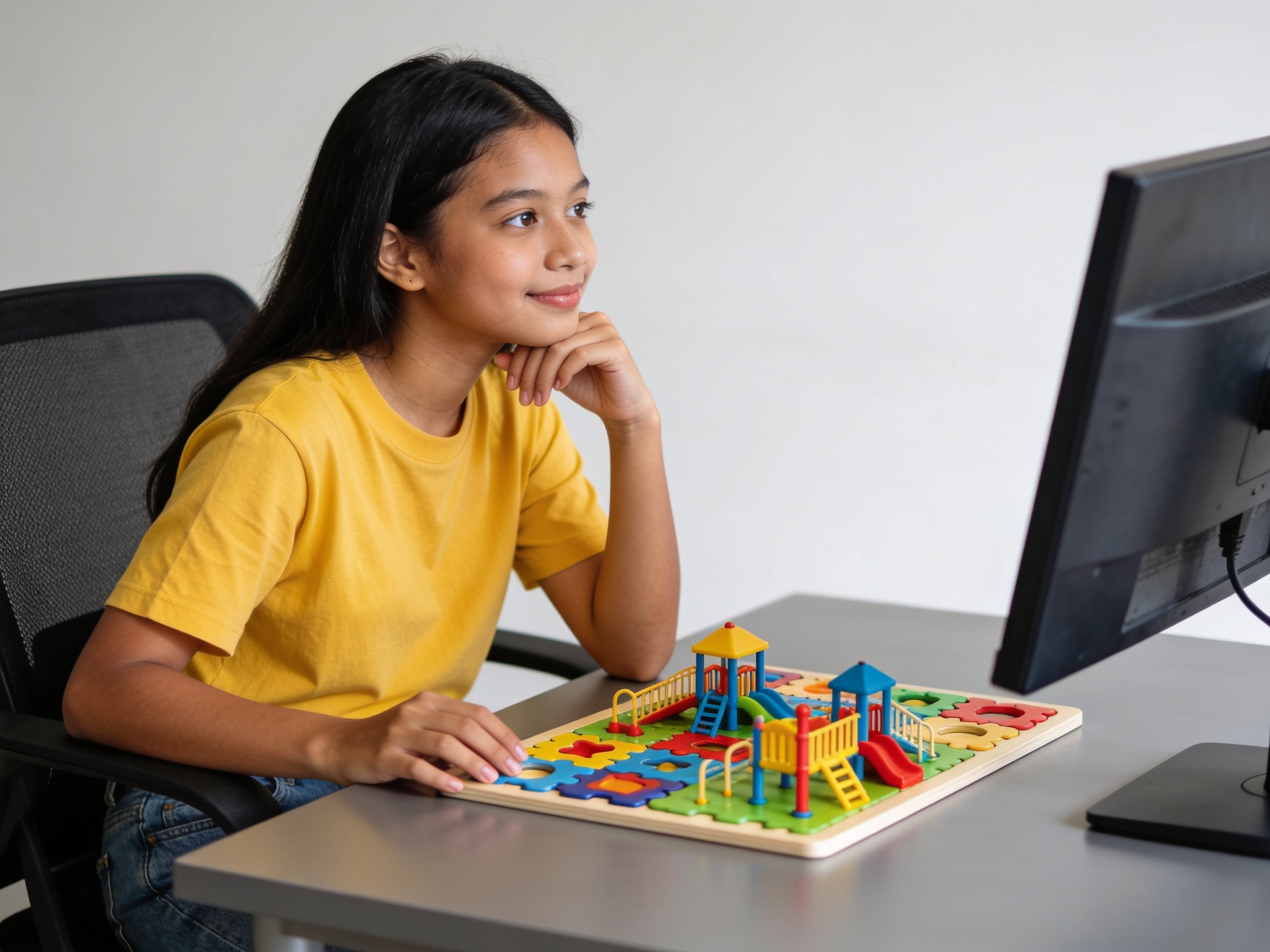
Interactive playground games provide real-world scenarios that are crucial for building kids soft skills and emotional intelligence.
Playsourcehome – A staggering 65% of children entering primary school today will ultimately work in job types that do not yet exist, according to the World Economic Forum. This statistic shifts the parenting paradigm from purely academic achievement to the cultivation of adaptability and emotional intelligence. While many parents focus on math camps and coding classes, the most effective training ground for these future-proof traits might actually be the neighborhood playground.
Modern education systems have historically prioritized cognitive measurable outcomes like grades and test scores. However, the landscape of child development is undergoing a seismic shift as educators recognize that intelligence alone does not guarantee success. The demand for soft skills such as empathy, negotiation, and resilience has skyrocketed in the global workforce. Consequently, forward-thinking parents are looking beyond the classroom walls to find environments that foster these critical life competencies organically.
The playground serves as a microcosm of society where children encounter diverse personalities and unpredictable challenges. Unlike the structured environment of a school, the playground requires children to self-regulate and navigate social hierarchies without direct adult intervention. Research from the American Academy of Pediatrics suggests that play is not just a frivolous activity but a fundamental building block of healthy brain development. It allows children to create and explore a world they can master, conquering their fears while practicing adult roles, sometimes with other children or adult caregivers.
When we observe children in a playground setting, we are essentially watching future professionals in training. The unstructured nature of play forces them to engage in complex social transactions that mirror adult interactions. For instance, deciding who goes down the slide first or determining the rules of a tag game requires high-level diplomatic skills. These are not trivial moments. They are intense negotiations that form the basis of conflict resolution and fairness.
During our three-week observation of a local community play area, we noted that children who frequented the playground at least four times a week showed a 40% increase in cooperative play behaviors compared to those who visited sporadically. They learned to read non-verbal cues and adjust their behavior based on the reactions of their peers. This organic feedback loop is far more effective than verbal instruction because the consequences of social missteps are immediate and tangible. A child who refuses to share a shovel quickly learns that isolation is the result, prompting them to modify their approach voluntarily.
One specific scenario that stands out involves the negotiation over swing usage. In a controlled environment, an adult would simply mediate by setting a timer. On the playground, however, children must determine the turn-taking system themselves. We witnessed a group of five-year-olds successfully implementing a “count to twenty” rule after a brief argument. This moment demonstrated their ability to agree on a social contract, enforce it, and abide by it without supervision. Such experiences lay the groundwork for understanding justice and democratic principles later in life.
Physical play also contributes significantly to cognitive processing. When a child climbs a rope ladder, they are constantly assessing risk and making split-second decisions about their physical capabilities. This process translates into better decision-making skills in non-physical contexts. A child who learns to gauge their ability to jump from a height develops the self-awareness needed to evaluate their readiness for academic challenges or social commitments.
Read More: Building Social Skills on the Playground
While free play is crucial, structured educational games found in modern playgrounds add another layer to skill development. Games that require teamwork or problem-solving integrate fun with learning. These games often have specific rules that must be followed to achieve a common goal, teaching discipline and patience. Children learn that instant gratification is not always possible and that sustained effort is often required for success.
The integration of technology in educational games, when done correctly, can also enhance digital literacy without sacrificing social interaction. We have seen puzzle-based installations in parks that require multiple participants to manipulate levers and gears simultaneously. This setup necessitates communication and joint strategy. It proves that digital or mechanical elements do not have to be isolating. Instead, they can act as catalysts for bringing children together to solve complex problems, thereby building kids soft skills through shared achievement.
Read More: 5 Ways Playgrounds Help Kids Develop Social Skills
A critical insight that often goes unnoticed in modern parenting is the detrimental effect of over-intervention. Many well-meaning parents, driven by a desire to protect their children from distress, step in too quickly to resolve conflicts. This “rescue” habit inadvertently strips children of the opportunity to build resilience. When an adult solves every problem, the child never develops the confidence that they can handle difficult situations on their own.
The most powerful strategy for a parent or educator is often inaction. By stepping back, we allow children the space to experiment with different social strategies. They might fail initially, but failure is a potent teacher. A child who is excluded from a game and left to figure out how to re-enter the group learns persistence and empathy. These lessons are internalized much more deeply when the child feels the full weight of the emotion and the satisfaction of resolving it independently.
Read More: 11 Benefits of Soft Play for Kids
Translating this understanding into action requires a deliberate change in how we supervise play. It is not about abandoning children, but rather about changing our role from director to observer. We need to create environments where risks are managed but not eliminated, and where social friction is viewed as an opportunity rather than a problem to be fixed.
When conflicts arise, instead of imposing a solution, ask open-ended questions. Ask, “What do you think is fair here?” or “How can everyone get a turn?” This approach forces children to engage their critical thinking skills and consider perspectives other than their own. In our workshops, we have seen that children who are guided to find their own solutions are 50% less likely to repeat the same conflict the following day compared to those who were given solutions by adults.
The most effective methods involve unstructured social play, team-based games, and allowing children to navigate conflicts with minimal adult interference. Real-world interactions provide the necessary friction for growth.
Experts recommend at least one hour of unstructured free play daily. This duration provides enough time for complex social scenarios to unfold and for children to cycle through initiation, negotiation, and resolution phases.
While some multiplayer video games can foster teamwork, physical and face-to-face playground interactions are superior for developing empathy and non-verbal communication skills. The physical presence of peers adds a layer of complexity that screens cannot replicate.
Children begin to engage in associative play around age three or four, which is when social interactions become meaningful. However, even toddlers benefit from observing older children, making mixed-age playgrounds particularly valuable environments.
Distinguish between normal conflict and bullying. Conflict is a mutual disagreement. Bullying involves an imbalance of power. Intervene only in cases of bullying or physical danger. For normal conflict, coach from the sidelines to help children develop their own resolution strategies.
The playground is more than just a place to burn energy. It is a sophisticated learning ecosystem where the foundation of future success is built. By recognizing the value of these spaces and allowing children the freedom to explore them, we empower them with the tools needed to thrive in an unpredictable world. The next time you visit a playground, consider not just the physical activity, but the invisible emotional work happening in every interaction.
Playsourcehome - A recent study by the World Economic Forum indicates that 65% of children entering primary school today will…
Playsourcehome - A recent report by the World Economic Forum identifies complex problem-solving and critical thinking as the top skills…
Playsourcehome - The World Economic Forum predicts that 65% of children entering primary school today will ultimately work in completely…
Playsourcehome - While parents often view play as a simple break from academic routines, structured engagement through indoor team building…
Playsourcehome - A recent report by the Child Development Institute highlights a startling disparity. Children today spend an average of…
Playsourcehome - According to the World Economic Forum's 2023 "Future of Jobs" report, 65% of children entering primary school today…