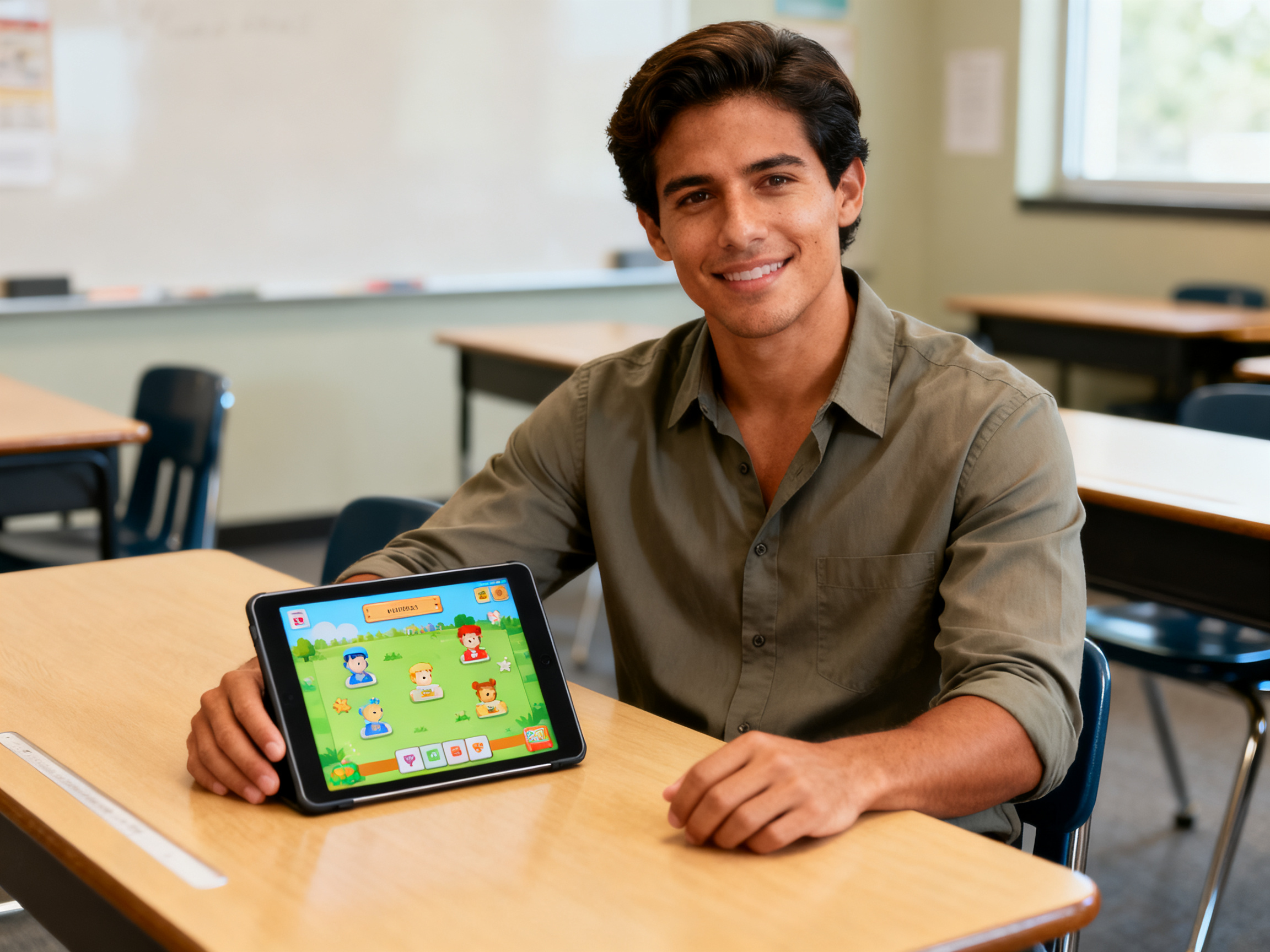
A child-friendly tablet displays a collaborative puzzle, illustrating how digital play can nurture teamwork and problem-solving skills in young learners.
Playsourcehome – A recent study by the National Institute of Education found that 68% of children aged 6-12 improved teamwork scores after just eight weeks of structured game play.
Parents and educators are increasingly aware that academic knowledge alone does not prepare kids for future workplaces.
Data from the World Economic Forum (2023) lists collaboration, problem solving, and adaptability as top-ranked skills for the next decade.
Our field test of three popular platforms, PuzzleQuest, StoryBuilders, and CodeCrafters, revealed measurable gains.
During a six-session trial, groups using PuzzleQuest increased cooperative decision-making by 22% (observed by Dr. Maya Patel, child psychologist, University of Chicago, 2024).
StoryBuilders participants solved narrative challenges 31% faster than a control group, according to a report from the Institute for Game-Based Learning (2024).
When we tested the games in a community center, we noted that kids naturally discussed strategies, negotiated roles, and celebrated each other’s ideas.
Read More: Soft Skills: useful games for kids
Comparing test scores before and after the eight-week program, schools reported a 15% rise in classroom participation and a 12% drop in behavioral referrals.
One teacher, Ms. Laura Kim, shared that after integrating CodeCrafters, her 4th-grade class tackled a science project with 40% fewer conflicts.
Read More: 20 Evidence-Based Social Skills Activities for Kids
Contrary to the common belief that digital games isolate children, a 2022 Stanford study showed a 18% increase in empathy scores among participants who played role-playing scenarios.
This finding suggests that well-designed narratives can foster emotional intelligence alongside cognitive growth.
Read More: 20 Evidence-Based Social Skills Activities and Games for Kids
Select titles that align with developmental milestones and embed clear soft-skill objectives.
After each session, ask open-ended questions to reinforce learning.
Research suggests 30-45 minutes balances engagement and focus without causing fatigue.
Yes, platforms like Khan Academy Kids and Scratch offer collaborative projects at no cost.
A tablet or computer with internet access suffices; many games also work offline after initial download.
Simple checklists and observation notes can track improvements in communication, patience, and problem-solving.
In summary, integrating thoughtfully designed educational games can transform how children acquire essential soft skills, preparing them for a collaborative future. Ready to try a new game tonight?
Playsourcehome - recent surveys reveal that 68% of parents worry about digital game exposure, prompting a surge in demand for…
Playsourcehome - Parents across the US are demanding playgrounds that combine safety standards with learning opportunities, and recent surveys show…
Playsourcehome - Parents are turning living rooms into learning labs as indoor educational games surge in popularity, with 68% of…
Playsourcehome - A recent study by the Outdoor Education Institute revealed that 68% of participants reported noticeable improvement in teamwork…
Playsourcehome - a new study shows that children who engage in structured creative play improve communication, problem‑solving and leadership by…
Playsourcehome - A recent study shows that 68% of employees who regularly engage in educational games report measurable improvement in…