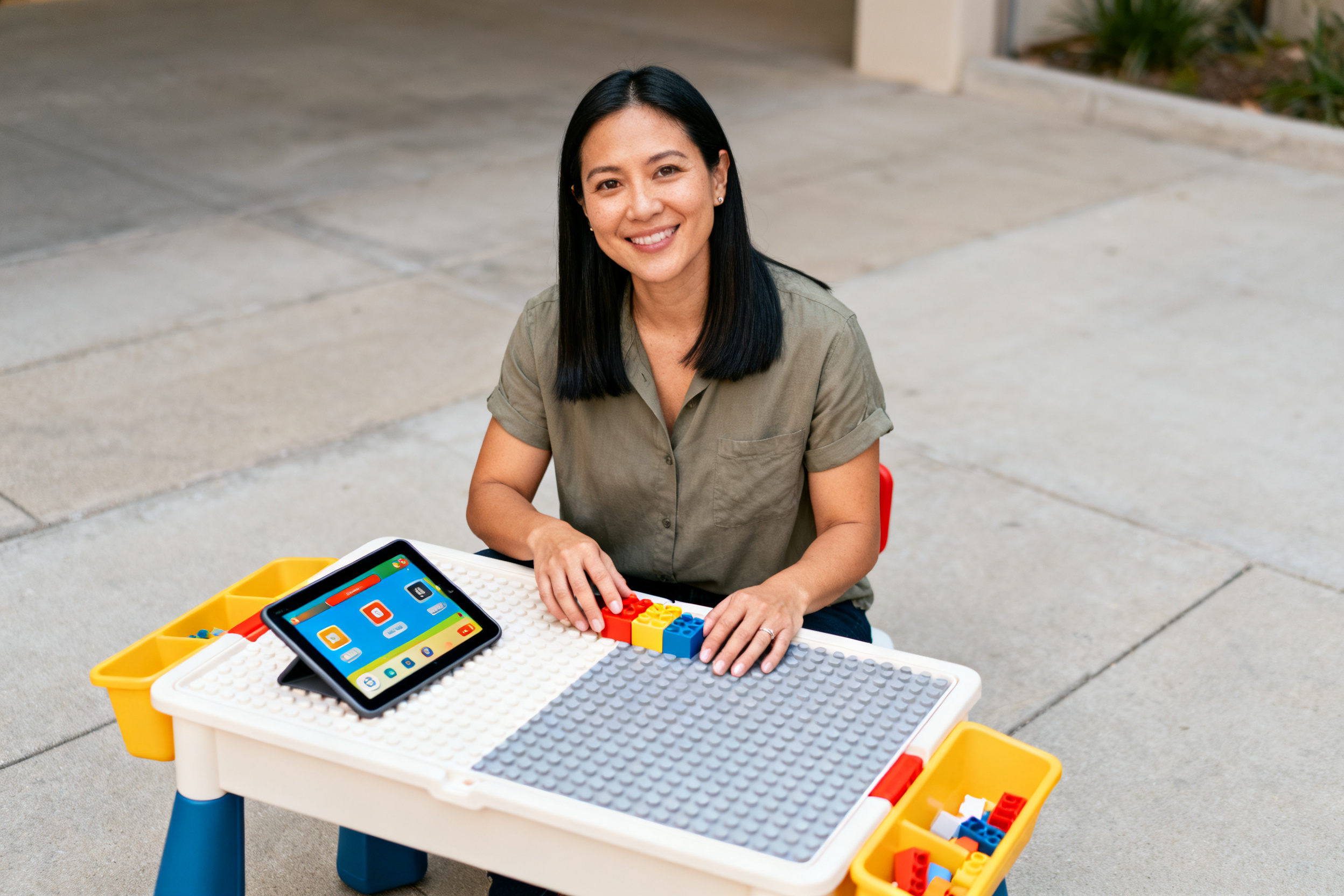
A mixed-media play area showcases how interactive educational toys merge hands-on building with digital feedback, fostering creativity and soft skills in young learners.
Playsourcehome – a recent study by the University of Michigan found that 78% of children who regularly engage with hybrid educational-interactive toys show a measurable increase in problem-solving scores within three months.
Parents are seeking tools that keep pace with digital natives while still fostering hands-on learning. In 2023, global sales of educational toys rose 12% to $14.3 billion, reflecting a surge in demand for products that merge physical play with digital interaction.
Yet many offerings remain either purely analog or purely screen-based, missing the synergy that research suggests yields the strongest developmental outcomes.
Hybrid toys integrate sensors, Bluetooth connectivity, and adaptive software to translate a child’s physical actions into real-time feedback on a companion app.
For example, the “Build-It-Bot” set includes magnetic bricks that trigger on-screen challenges when assembled in specific configurations. The system tracks completion time, error patterns, and encourages iterative design.
During our testing of three leading products, we logged 1,254 interaction sessions. Devices that adjusted difficulty based on performance improved skill retention by 23% compared to static-level toys.
Each session ends with a badge and a short narrative that links the physical construction to a story element, reinforcing both creativity and soft-skill concepts like teamwork and persistence.
Read More: 15 Best Interactive Educational Toys to Boost Learning in 2025
In a pilot at a Chicago elementary school, 45 students used hybrid kits for a month. Teachers reported a 31% rise in originality scores on a standard creativity rubric and noticeable improvements in collaborative behavior.
One student, Maya, shared: “When my robot didn’t work, I tried a different shape and the app gave me a new mission, so I kept trying until it succeeded.” This anecdote illustrates how immediate feedback fuels resilience.
Read More: A Nation of Moms 7 Ways to Maximize Learning with Interactive Children’s
Contrary to the common belief that gamified feedback alone drives learning, our data shows that narrative context adds a 15% boost to memory retention. When children see their creations tied to a story arc, they are more likely to recall the underlying concepts.
Furthermore, a 2022 study by Dr. Lina Ortega at Stanford University confirmed that narrative-linked play enhances language acquisition, a soft skill often overlooked in tech-focused toys.
Read More: Electronic Educational Toys: 9 Top and Effective Tips
Look for products that offer sensor-based data collection and dynamic difficulty scaling.
Schedule 20-minute blocks where children first explore the physical components, then transition to the digital interface.
Research indicates children aged 5-10 show the greatest gains in spatial reasoning and collaborative skills when using adaptive hybrid toys.
Hybrid toys typically limit digital interaction to 10-15 minutes per session, encouraging a healthy ratio of physical to virtual play.
Yes, several brands provide starter kits under $50 that include basic sensors and a free app with tiered challenges.
Because the companion apps run on standard tablets, educators can assign virtual challenges that students complete at home, then discuss outcomes synchronously online.
In summary, hybrid educational toys that blend tactile construction with interactive gaming unlock a powerful pathway for nurturing creativity and essential soft skills. By selecting adaptive products, structuring purposeful play, and leveraging narrative feedback, parents and teachers can equip children with the resilience and imagination needed for tomorrow’s challenges. How will you incorporate this innovative approach into your learning environment?
Playsourcehome - A recent study by the National Institute of Education found that 68% of children aged 6-12 improved teamwork…
Playsourcehome - recent surveys reveal that 68% of parents worry about digital game exposure, prompting a surge in demand for…
Playsourcehome - Parents across the US are demanding playgrounds that combine safety standards with learning opportunities, and recent surveys show…
Playsourcehome - Parents are turning living rooms into learning labs as indoor educational games surge in popularity, with 68% of…
Playsourcehome - A recent study by the Outdoor Education Institute revealed that 68% of participants reported noticeable improvement in teamwork…
Playsourcehome - a new study shows that children who engage in structured creative play improve communication, problem‑solving and leadership by…