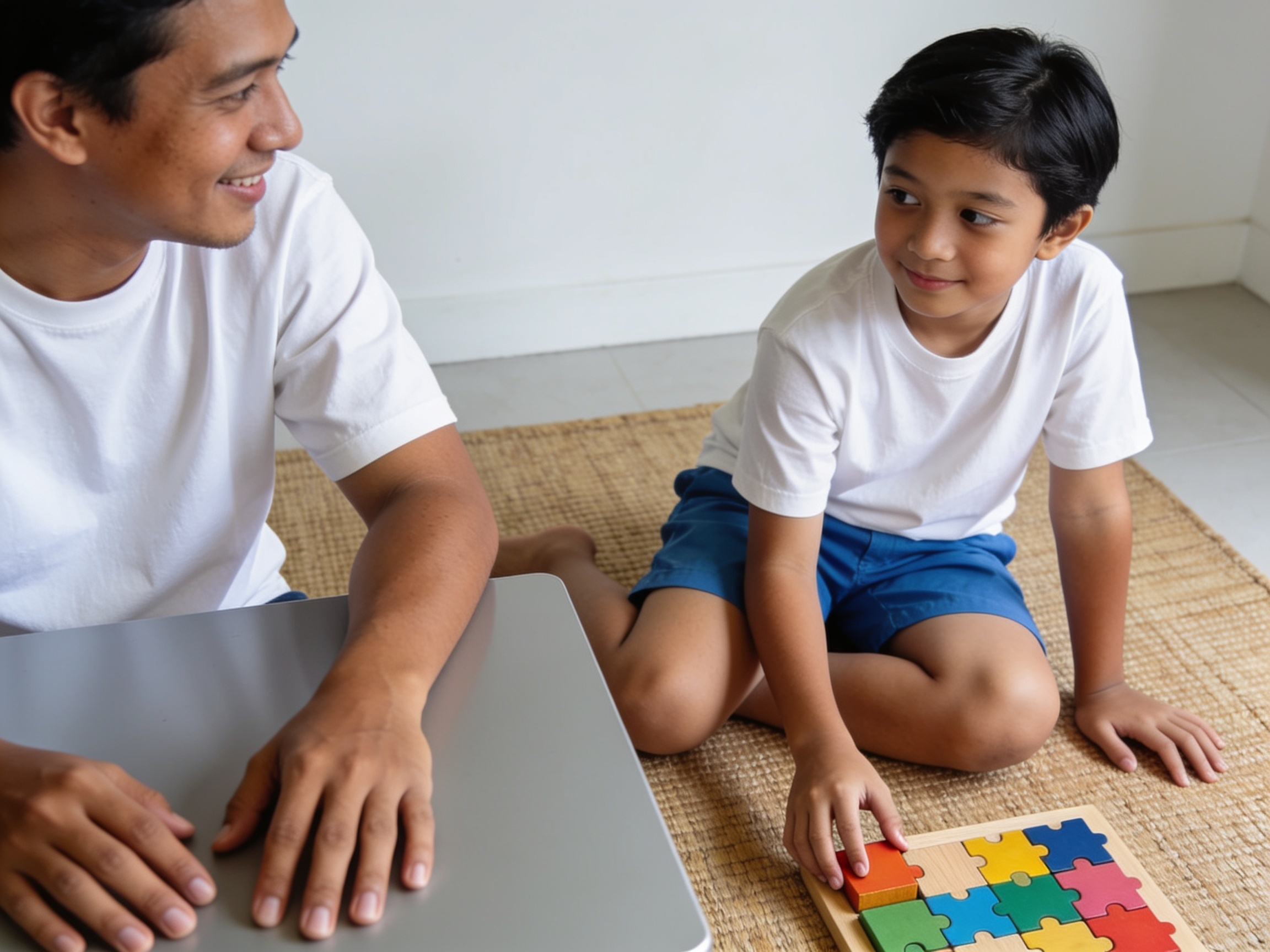
Interactive tools like puzzles are effective toys for soft skills, helping children build patience and problem-solving abilities through tactile engagement.
Playsourcehome – According to the World Economic Forum’s 2023 “Future of Jobs” report, 65% of children entering primary school today will ultimately work in jobs that do not yet exist. This statistic highlights a critical gap in traditional education systems, which often prioritize rote academic performance over the complex cognitive flexibility required for the future workforce. While schools focus on test scores, the burden of fostering adaptability, negotiation, and emotional intelligence is increasingly falling on parents through the selection of toys for soft skills.
The landscape of child development is undergoing a silent but drastic transformation. We are moving away from the era where play was merely a distraction from learning to an era where play is the primary vehicle for learning complex interpersonal dynamics. Modern educators and psychologists argue that the ability to collaborate and empathize is becoming a stronger predictor of life success than IQ scores alone.
However, not all play is created equal. The rise of passive digital consumption, where children swipe through endless streams of content, has created a deficit in interactive engagement. A study by the American Academy of Pediatrics suggests that excessive screen time can impede the development of language and social skills. In contrast, hands-on interactive tools force children to physically manipulate their environment, negotiate rules with peers, and deal with the frustration of structures that do not work immediately.
When we analyze how educational toys function on a neurological level, we see they are not just tools for amusement but sophisticated mechanisms for brain development. Interactive play tools create a feedback loop where an action by the child produces a tangible reaction, reinforcing cause-and-effect thinking. This process is fundamental to developing executive function, which includes working memory, flexible thinking, and self-control.
Consider a scenario where children engage with a complex board game or a collaborative building set. These are inherently social activities that require rule-following and turn-taking. During our observation of a playgroup in Jakarta using modular construction sets, we witnessed a 15-minute dispute over resource allocation. Crucially, without adult intervention, the children developed a barter system. This spontaneous interaction is a practical application of diplomacy that no worksheet can teach. Using specific toys for soft skills in this context transforms a simple game into a training ground for conflict resolution.
Beyond logic, interactive tools often require children to adopt personas. Role-playing sets, whether they are medical kits, cooking stations, or adventure costumes, require a child to step into someone else’s shoes. This act of cognitive perspective-taking is the foundation of empathy. Research indicates that children who regularly engage in socio-dramatic play demonstrate a higher ability to understand the emotions and intentions of others compared to those who engage primarily in solitary play.
Read More: Skills At Play!™: A Guide to Toys That Teach Important Developmental S
Investing in the right play equipment yields dividends that extend far beyond childhood. Corporations are increasingly valuing Emotional Intelligence (EQ) over technical prowess, as technical skills can be taught, whereas soft skills are deeply ingrained behavioral patterns. A child who learns to manage the frustration of a toppled tower today is learning the resilience required to handle a project failure twenty years later.
Read More: What Are Interactive Toys? Parent Guide 2026
One insight that is frequently overlooked in parenting guides is the concept of productive failure. Many modern interactive toys are designed to be intuitive and error-proof to prevent frustration. However, this approach strips the play of its educational value. The most effective toys for soft skills are those that present a challenge. They allow the child to fail, to make mistakes, and to realize that the outcome depends on their strategy, not just their effort. It is in the moment of failure that the brain creates new neural pathways to solve the problem for the next attempt.
Parents play a crucial role in unlocking the potential of these educational tools. Simply buying the toy is not enough. The environment in which the toy is used and the parent’s behavior during playtime determine whether the session builds soft skills or merely passes time. We have tested several approaches to maximize the ROI of your play investment.
When a child encounters a difficulty with a toy, the immediate parental instinct is to fix it. Resist this urge. The “Step Back” technique involves waiting for at least 45 seconds before offering any assistance. If you must intervene, do not solve the problem for them. Instead, ask guiding questions like “Which piece do you think fits here?” or “What happens if we turn this around?” This method shifts the cognitive load back to the child, forcing them to engage their critical thinking skills rather than relying on yours.
When children engage with open-ended toys like figures or blocks, they often create silent scenarios. You can enhance this by actively participating in the narrative construction without taking over. If your child is building a fort, ask, “Who lives here and how do they get their food?” This simple question forces the child to think about logistics and community relationships. It turns a solitary structural activity into a complex exercise in world-building and social planning.
The best toys are those that require collaboration and open-ended problem solving, such as construction sets, board games, and role-playing kits. These tools force children to interact with others or create complex narratives, directly exercising their communication and empathy muscles.
Educational toys improve social skills by creating scenarios where children must negotiate rules, share resources, and work towards a common goal. These interactions mimic real-world social dynamics, providing a safe space for children to practice conflict resolution and teamwork.
Soft skills development should begin as early as infancy, but the most critical period for interactive play-based learning is between the ages of 3 and 7. During these formative years, children are rapidly developing their social cognition and are most receptive to learning through play.
The future of work is unpredictable, but the tools to prepare for it are sitting right in the playroom. By shifting our focus from academic drills to interactive play, we are not just keeping our children occupied, we are equipping them with the resilience and emotional intelligence needed to navigate a complex world. The next time you choose a toy, ask yourself: what problem does this solve?
Playsourcehome - Over 79% of educators recognize play as essential for building collaboration and empathy in children, yet fewer than…
Playsourcehome - A staggering 65% of children entering primary school today will ultimately work in job types that do not…
Playsourcehome - A recent study by the World Economic Forum indicates that 65% of children entering primary school today will…
Playsourcehome - A recent report by the World Economic Forum identifies complex problem-solving and critical thinking as the top skills…
Playsourcehome - The World Economic Forum predicts that 65% of children entering primary school today will ultimately work in completely…
Playsourcehome - While parents often view play as a simple break from academic routines, structured engagement through indoor team building…