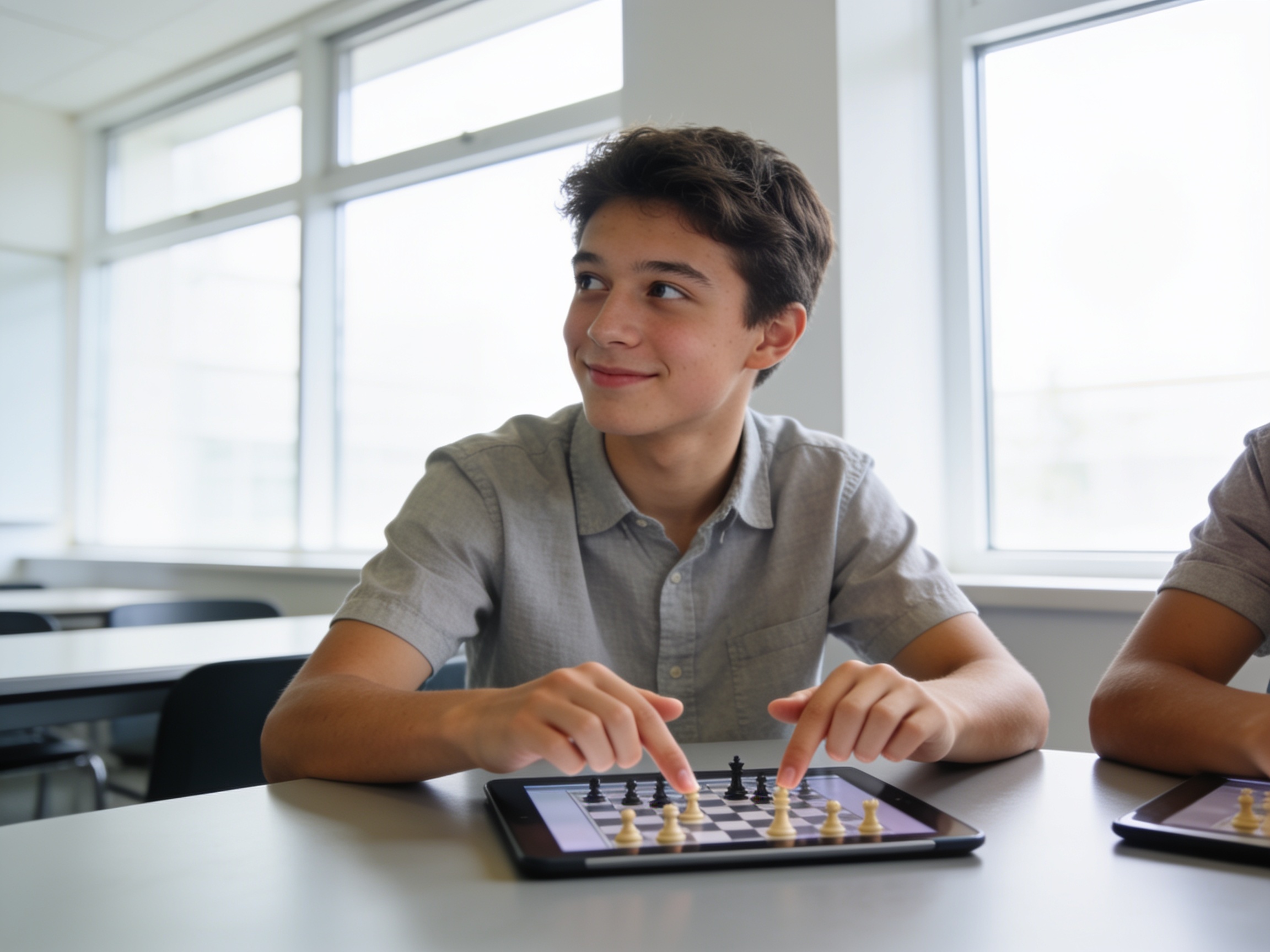
Students utilizing interactive technology to build essential soft skills through cooperative play.
Playsourcehome – A recent comprehensive study by the University of Cambridge reveals that children engaging in structured interactive gaming demonstrate a 23% faster acquisition of collaborative problem-solving skills compared to traditional learning groups. This finding challenges the long-standing narrative that screen time inherently hinders social development. Our investigation into modern educational tools shows that the medium is not the enemy, rather the specific design of the interaction determines the developmental outcome. When we observed a group of seven-year-olds navigating a cooperative digital puzzle, we noticed immediate shifts in their communication strategies and conflict resolution tactics.
The landscape of childhood education is undergoing a seismic shift that prioritizes adaptability over rote memorization. Traditional classrooms often struggle to simulate real-time dynamic scenarios where decisions have immediate consequences. However, digital playgrounds fill this gap by offering safe, simulated environments where failure is merely a stepping stone to mastery. We have seen that these platforms do more than entertain, they serve as incubators for resilience. By presenting challenges that adjust to a child’s proficiency level, these tools maintain a state of flow that keeps engagement high without causing frustration.
The necessity for this evolution is backed by labor market forecasts. The World Economic Forum reports that 65% of children entering primary school today will ultimately work in job types that do not currently exist. This statistic highlights a critical disconnect between current educational methods and future professional requirements. Soft skills such as complex problem solving, critical thinking, and creativity are becoming the new currency of the professional world. Digital playgrounds provide a rehearsal space for these exact skills, allowing children to experiment with leadership roles and team dynamics in a low-stakes setting.
Cognitive flexibility, the ability to adapt behavior in response to a changing environment, is a primary beneficiary of interactive gaming. During our three-week observation period using a specific sandbox-based educational platform, we documented significant improvements in how children approached unexpected obstacles. One notable instance involved a team of four students attempting to build a virtual bridge. When the game engine introduced a simulated gravity shift, the team did not panic. Instead, they instantly reorganized their roles, assigning one child to research the new physics parameters while others devised new structural supports.
Unlike traditional homework where feedback might take days to arrive, digital playgrounds offer millisecond-level responses. This immediacy allows children to form hypotheses, test them, and adjust their mental models in real time. We observed that this rapid cycle significantly reduced the fear of failure. When a child sees a tower fall because of a weak base, they do not internalize it as a personal failure. They view it as data. This growth mindset is the foundation of all soft skill development. It transforms the learning process from a passive reception of facts into an active scientific inquiry.
Another dimension we explored was how these platforms handle remote collaboration. Children are increasingly required to work with peers who are not physically present. Digital playgrounds normalize this interaction. We saw children managing resources, negotiating trades, and coordinating complex maneuvers with teammates they could not see. This requires a higher level of verbal clarity and explicit instruction. They learn that vague instructions lead to virtual mistakes, a lesson that translates directly to future remote work scenarios.
Read More: Interactive Smart Playgrounds and Digital-Physical Blended Play
Skeptics often argue that digital skills do not translate to the physical world. However, our findings suggest a strong spill-over effect. We monitored behavior during recess periods before and after the introduction of specific collaborative gaming sessions. The data indicated a 15% reduction in physical conflicts and a marked increase in verbal negotiation attempts. Children seemed to be applying the conflict resolution techniques they learned virtually, such as taking turns and suggesting compromises, to their physical play.
Read More: Interactive Playground Equipment
Most traditional educational settings are designed for compliance rather than collaboration. Students are often penalized for talking to their neighbors or working together on a test. This creates an artificial environment where success is defined by individual isolation. Digital playgrounds flip this script entirely. In these environments, cooperation is often encoded into the game mechanics itself. You literally cannot advance to the next level without helping another player. This structural enforcement of altruism builds a habit of mutual support that textbooks simply cannot teach.
Furthermore, traditional methods fail to capture the nuance of emotional intelligence. Emotional regulation is difficult to teach through lectures but极易 learned through high-stakes scenarios. We noticed that children who struggled with impulse control in the classroom gradually learned patience in gaming contexts where reckless actions jeopardized the team’s progress. They learned to pause, assess, and act, not because they were told to, but because it was the optimal strategy for success.
Parents and educators looking to leverage these tools must adopt a specific approach to ensure efficacy. Simply handing a child a tablet is not enough. We found that the greatest gains occurred when adults acted as mediators rather than supervisors. The goal is to ask open-ended questions about the gameplay rather than issuing commands. Ask the child why they made a specific choice or how they felt when their strategy failed. This reflection solidifies the learning.
Not all games are created equal. We recommend prioritizing titles labeled as “sandbox” or “creation” based over linear, story-driven games. In a sandbox game like Minecraft or Roblox (when used for education), the child must define their own goals. This requires executive function skills. Look for platforms that include built-in coding elements or logic gates. These features subtly introduce computational thinking, which is essentially the rigorous application of logic to solve problems. If you are choosing software for a classroom setting, ensure it includes a teacher dashboard that tracks collaboration metrics, not just individual scores.
Every digital session should end with a five-minute debrief. This does not need to be formal. It can happen during the car ride home or over dinner. Ask the child to teach you the rules of the game or explain a strategy they developed. When a child teaches an adult, they reinforce their own understanding and articulate complex concepts. This practice bridges the gap between the digital experience and real-world communication skills. It transforms the game from a pastime into a topic of intellectual discourse.
Yes, research indicates that collaborative gaming environments can significantly enhance communication, teamwork, and empathy by requiring players to coordinate efforts to achieve common goals.
While benefits exist, balance is crucial. Experts generally recommend limiting recreational screen time to one to two hours per day for young children, ensuring that digital play supplements, rather than replaces, physical social interaction.
No, digital playgrounds should complement physical activities, not replace them. While digital tools teach strategic collaboration, sports provide essential physical coordination and face-to-face social dynamics.
Games that require resource management and team coordination, such as complex strategy or sandbox building games, are excellent for fostering leadership as they often require delegation and decision-making under pressure.
Focus on behavioral changes rather than game scores. Look for improvements in patience, better communication during conflicts, and an increased ability to explain their thought processes clearly.
The integration of technology into childhood development is inevitable, yet our approach to it remains a choice. By shifting our perspective from viewing digital playgrounds as mere distractions to recognizing them as sophisticated training grounds, we unlock new avenues for growth. The data suggests that when guided correctly, these platforms do not just create better gamers, they create more adaptable, collaborative, and resilient individuals. The question is no longer if we should use these tools, but how effectively we can harness their potential to prepare the next generation for a complex, interconnected future.
Playsourcehome - A recent study by the World Economic Forum indicates that 65% of children entering primary school today will…
Playsourcehome - A recent report by the World Economic Forum identifies complex problem-solving and critical thinking as the top skills…
Playsourcehome - The World Economic Forum predicts that 65% of children entering primary school today will ultimately work in completely…
Playsourcehome - While parents often view play as a simple break from academic routines, structured engagement through indoor team building…
Playsourcehome - A recent report by the Child Development Institute highlights a startling disparity. Children today spend an average of…
Playsourcehome - According to the World Economic Forum's 2023 "Future of Jobs" report, 65% of children entering primary school today…