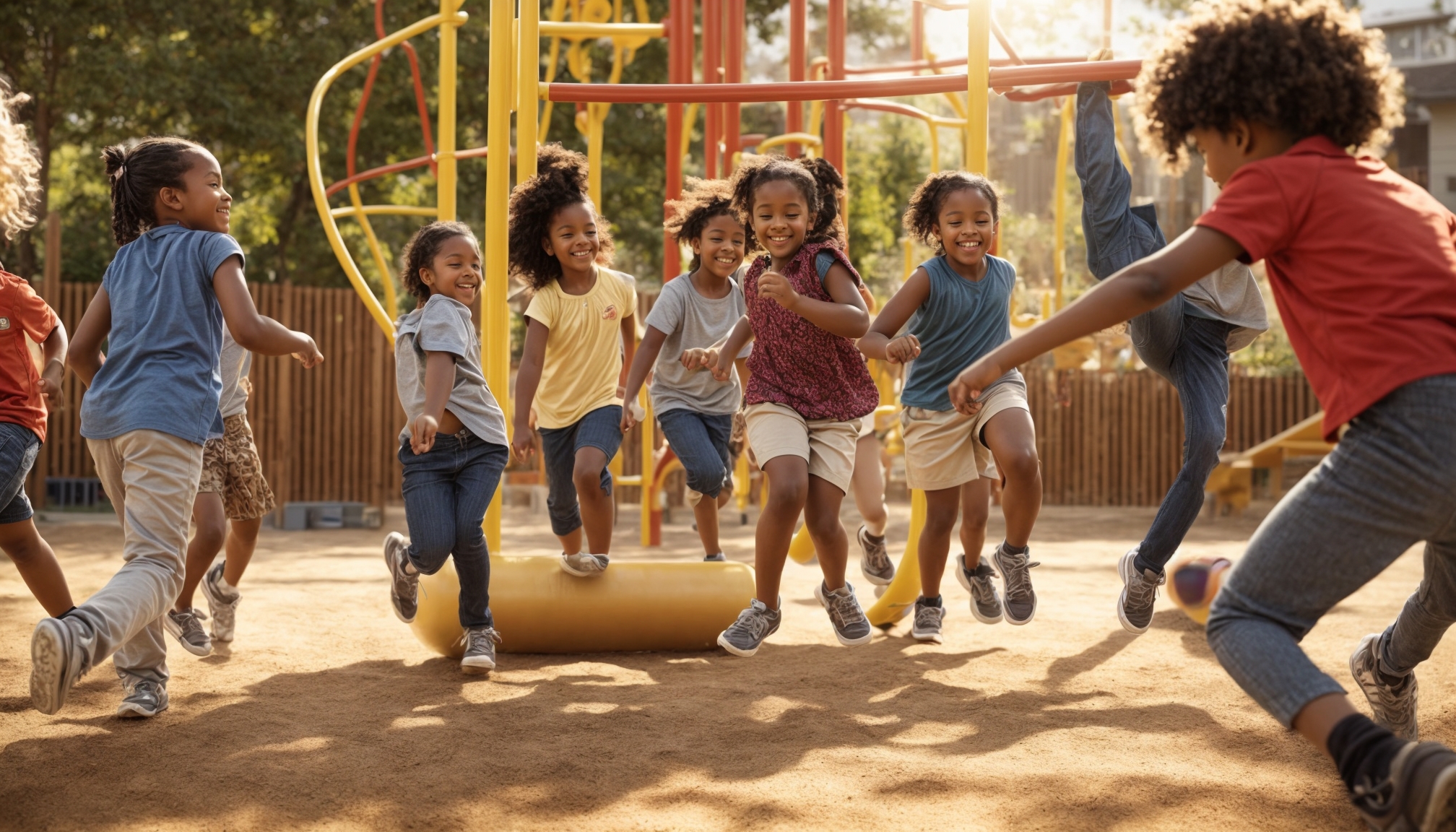
PlaySourceHome – Parents and teachers increasingly rely on creative movement games kids enjoy on playgrounds to keep children active, social, and engaged while developing essential skills.
Playgrounds give children a natural stage to explore their bodies, test limits, and learn boundaries. When adults introduce creative movement games kids love, the play area turns into a powerful space for learning. These activities sharpen balance, coordination, and agility without feeling like structured exercise.
Regular movement play also supports emotional regulation. Children release energy, reduce stress, and feel more confident in their physical abilities. In addition, playful movement encourages positive risk-taking, such as trying new actions on safe surfaces, instead of reckless behavior that can lead to injury.
On the social side, creative play teaches children to cooperate, take turns, and respect rules. Games that involve teams or partners help shy children connect more easily. Over time, repeated play can even improve language skills as kids negotiate rules and describe their actions.
To support creative movement games kids enjoy, adults must pay attention to playground design. A variety of surfaces, such as grass, rubber, and sand, offers different sensory experiences and challenges. Adequate space between structures allows children to run, jump, and spin without constant collisions.
Clear safety rules remain essential, but they should not limit imagination. Instead of banning certain movements, adults can guide children to safer versions. For example, they can encourage rolling on softer ground rather than climbing too high on equipment intended for older age groups.
Meanwhile, visual cues like ground markings or cones can suggest game boundaries without strict fences. These subtle signals help organize large group play and prevent chaotic running that might overwhelm younger participants.
Many of the best creative movement games kids play require no equipment at all. One classic option is an “animal parade,” where children move like different animals across the playground. They might hop like frogs, tiptoe like cats, or stomp like elephants, building strength and coordination along the way.
Another easy idea is “shape statues.” An adult calls out a word such as big, tiny, wide, or twisted, and children freeze their bodies into matching shapes. This playful activity supports body awareness and introduces early geometry concepts through movement.
Tag variations also work well. Instead of simple chasing, the “shadow tag” version asks kids to tag each other’s shadows, encouraging awareness of light and space. As a result, the game becomes less aggressive while staying exciting and fast-paced.
Effective creative movement games kids enjoy blend light structure with plenty of freedom. Too many rules can stop imagination, but zero guidelines may lead to unsafe chaos. Adults can offer a clear game objective and then let children experiment with how they move.
For example, in a “movement pathway” game, an adult sets a route around the playground and invites children to choose how they travel it. Some may skip, others might crab-walk, and a few could roll on safe surfaces. The shared path supports safety while personal choices nurture creativity.
Read More: Guidelines on physical activity for school-age children
Music can also guide structure without heavy instructions. When the music plays, kids move however they like. When it stops, they freeze. Over time, adults can add simple prompts such as move high, move low, or move in a circle, giving just enough direction to spark new ideas.
Inclusive planning helps every child access creative movement games kids enjoy, regardless of ability or confidence level. Offering multiple ways to join, such as rolling, crawling, or walking instead of running, allows children to choose comfortable options.
Pairing children thoughtfully also makes a difference. A confident mover can support a more cautious peer, modeling actions while encouraging participation. In addition, adults can provide quiet zones at the edge of the playground where children regroup if they feel overwhelmed.
Using simple visual cards that show possible movements, like jumping or spinning, supports children who respond better to images than verbal instructions. These tools make the game rules clearer and reduce frustration for kids who process information differently.
Adults do not need advanced training to guide creative movement games kids will remember. They only need to observe, stay flexible, and prioritize safety. Starting with short, familiar activities helps children understand expectations before adults introduce new twists.
Rotating roles adds excitement. Allowing children to act as movement leaders or “game captains” builds leadership skills and ownership. When kids propose new ways to hop, crawl, or spin, the group often discovers fresh favorites that become regular parts of playground routines.
Consistent encouragement matters more than perfect instructions. When adults praise effort and creativity instead of speed or strength, children of all abilities feel valued. Over time, this approach ensures that creative movement games kids enjoy become a core part of everyday playground life, supporting healthy bodies, strong friendships, and lasting confidence.